
Walk through any watch collector's home and you will find a small group of watches kept slightly apart from the rest of the collection — in a separate drawer, a separate winder slot, sometimes a separate safe. These are the limited editions. They are the watches the collector bought knowing they would be worth more in ten years than they paid, and that they would never have the chance to buy again at the original price.
This is the guide to understanding why limited-edition luxury watches hold their value the way they do, what separates the limited editions that actually appreciate from the ones that don't, and which pieces in the Lucky Harvey catalogue fit the criteria that watch collectors use to identify long-term value.
The Economics of Scarcity
The simplest reason limited-edition watches hold value is the most fundamental economic principle: supply is capped, demand is not.
A standard production watch can be reordered, restocked, and reissued. If the watch becomes popular, the manufacturer scales up. The price stays roughly stable because supply meets demand.
A limited-edition watch cannot be reordered. Once the production run is complete, the manufacturer commits to never producing more. If the watch becomes popular afterwards, demand has nowhere to go but the secondary market — and the secondary market reprices the watch based on how many collectors want one versus how many exist in the world.
This is why limited editions from established makers routinely sell for 1.5x to 5x their original retail price within years of selling out. The watch did not become more expensive to manufacture. The world simply ran out of ways to buy one at the original price.
What Makes a Limited Edition Actually Limited?
Not every "limited edition" watch is meaningfully limited. The industry has, over the last decade, produced a wave of "limited editions" that are really just colour variants of standard production watches with a number engraved on the caseback. These watches almost never appreciate, because they are not actually scarce — just labelled as such.
A truly limited edition meets at least three of the following five criteria. The more it meets, the better its long-term value retention.
1. A Hard Production Cap
The manufacturer commits in writing to a specific maximum production run — typically expressed as "limited to X pieces worldwide" with serial numbering on each unit. Hard production caps of 500 pieces or fewer have historically been the threshold for meaningful scarcity in the independent watchmaking market.
2. A Distinguishing Feature
The watch must have something materially different from the standard production line — a special dial finish, a complication not offered elsewhere, a case material upgrade, or a movement variant. A limited edition that is just a different colour of the standard production watch will not appreciate.
3. Serial Number Engraving
Each piece must be individually numbered, typically engraved on the caseback in the format "125 / 300". The serial number is the watch's authenticity verification on the secondary market and is essential for resale value.
4. Time-Limited Production Window
The watch is produced and sold over a specific window (a year, a season, a particular event) and then permanently retired. The discontinuation date is documented and verifiable.
5. Maker Reputation
Limited editions from established makers with industry recognition retain value better than limited editions from new or marginal brands. The maker's continued reputation supports the secondary market.
Why Independent Limited Editions Appreciate Faster
The watch collecting market has historically focused on three categories: Swiss heritage limited editions (Patek, Audemars, Rolex), discontinued models from established brands, and limited editions from notable independent makers.
The third category — independent makers — has produced the strongest year-over-year appreciation in the last decade. The reason is structural: independents produce smaller runs, the supply is genuinely capped, and collector communities have grown around brands that produce unusual complications that the major Swiss houses do not.
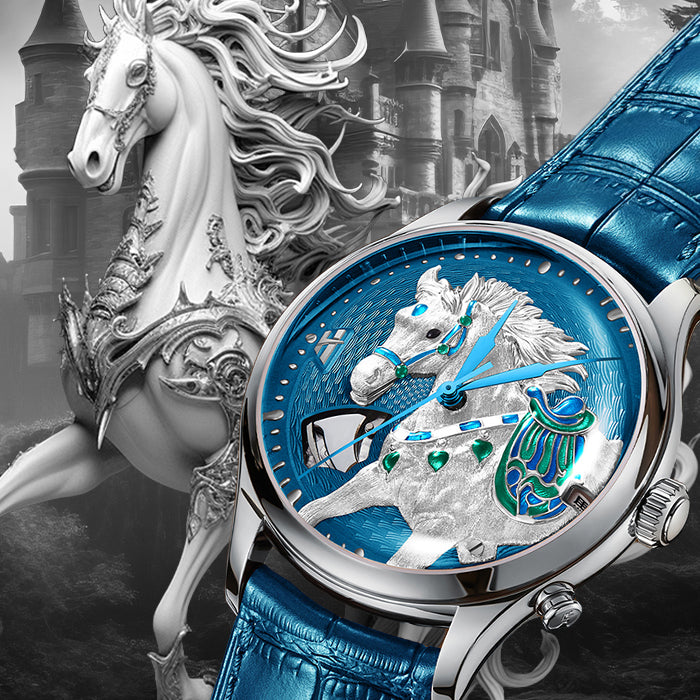
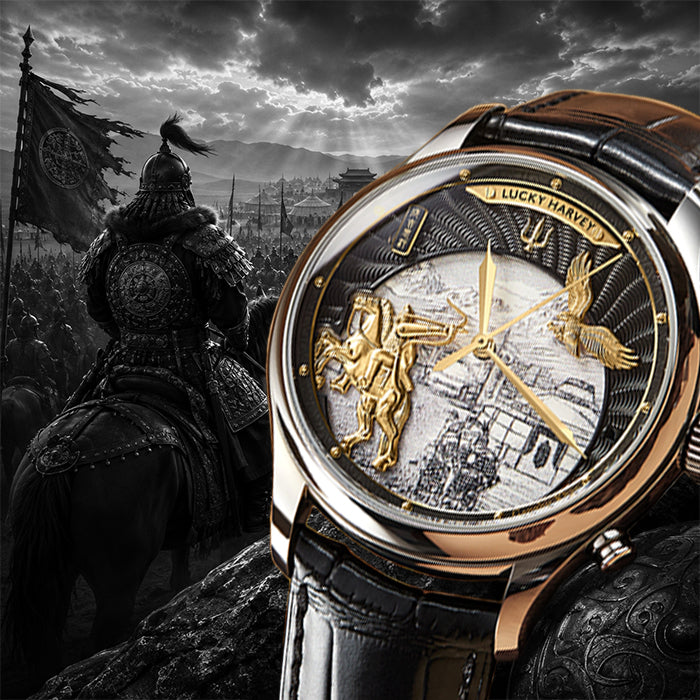
For Lucky Harvey specifically, the limited-edition chiming watches and automaton complications fit this pattern — small production runs of complications that simply do not exist in the price range from any other maker.
The Lucky Harvey Limited Editions That Fit Collector Criteria
The Lucky Harvey catalogue includes multiple limited-edition pieces. Four categories stand out for long-term value characteristics.
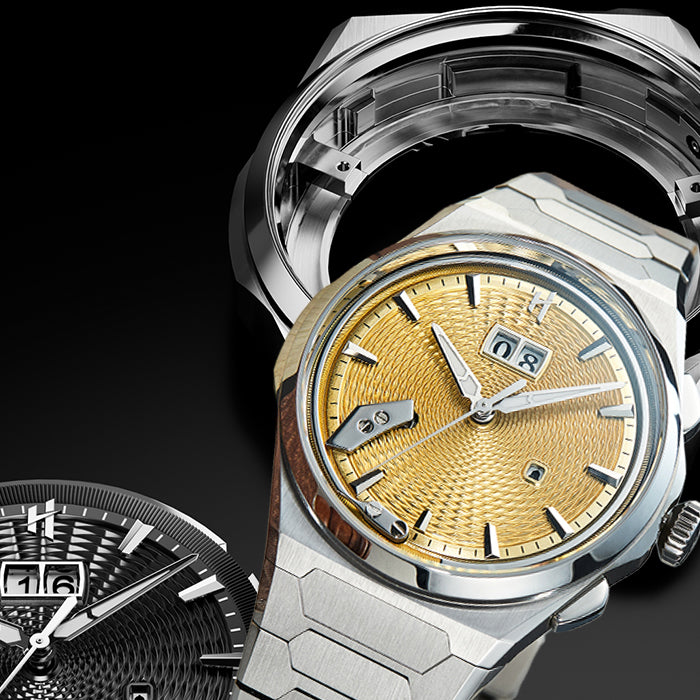
The Titanium Chiming Series
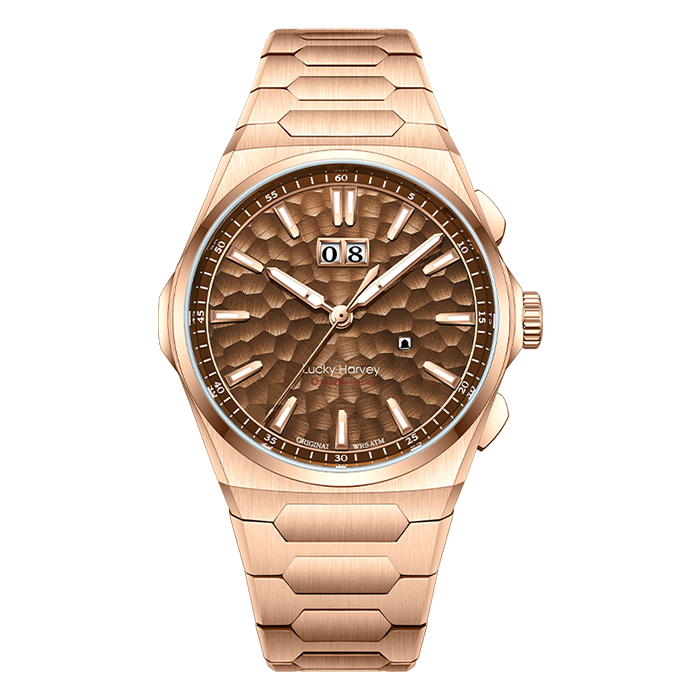
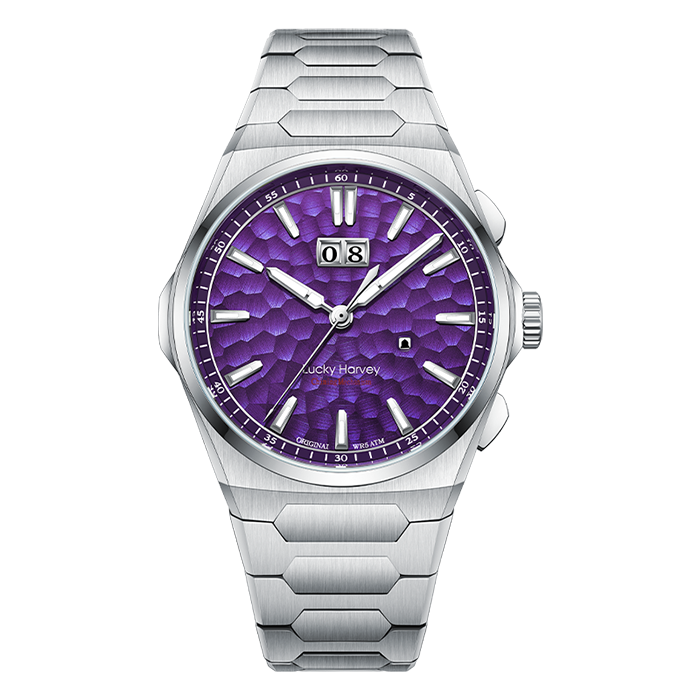
The flagship limited edition. Hand-engraved guilloche dials, titanium cases, upgraded chime mechanism, production runs typically under 100 pieces per colour variant. Browse the Titanium Chiming collection. The combination of complication, materials, and very small production run makes these the strongest long-term value pieces in the catalogue.

The Sound of Nature Chiming Limited Editions
The brand's signature chiming series in dial colours produced in capped runs (typically 300 per colourway). The chime mechanism alone — the world's first automatic chiming with switchable silent mode — establishes scarcity at the complication level, not just the production level. Browse the Sound of Nature collection.

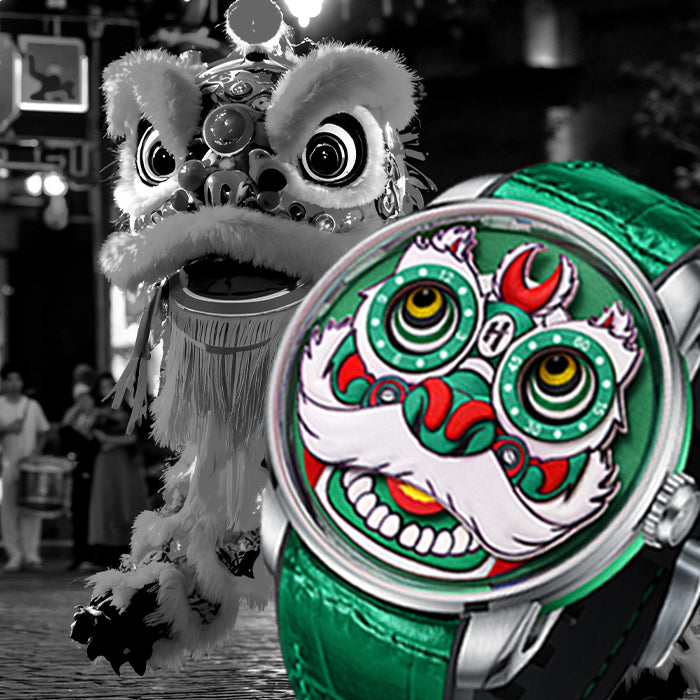
The Enamel Chiming Snake Series
The intersection of chiming complication and hand-painted vitreous enamel dial work. Enamel is one of horology's most demanding dial techniques and one of the slowest to produce — a master enamel dialist can finish only a few dials per month. The Enamel Chiming Snake series is constrained at the manufacturing level by the speed of enamel production.

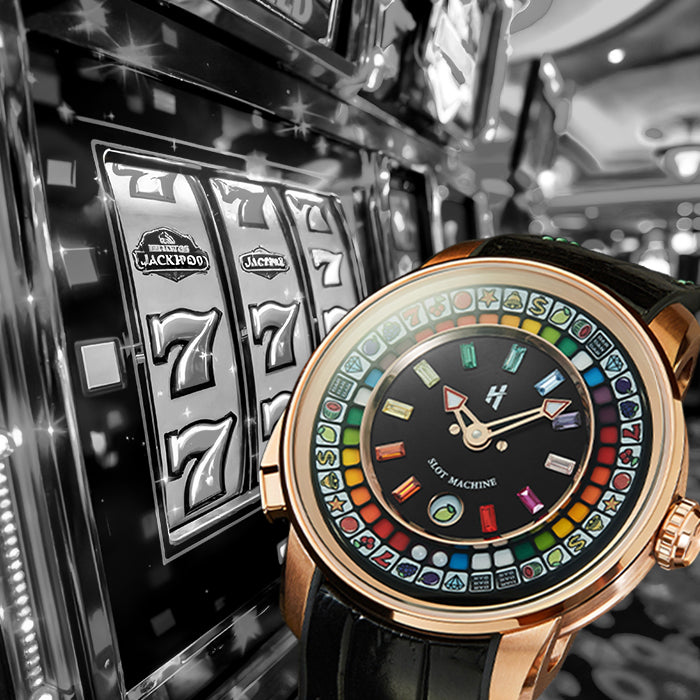
The Slots Machine Limited Editions
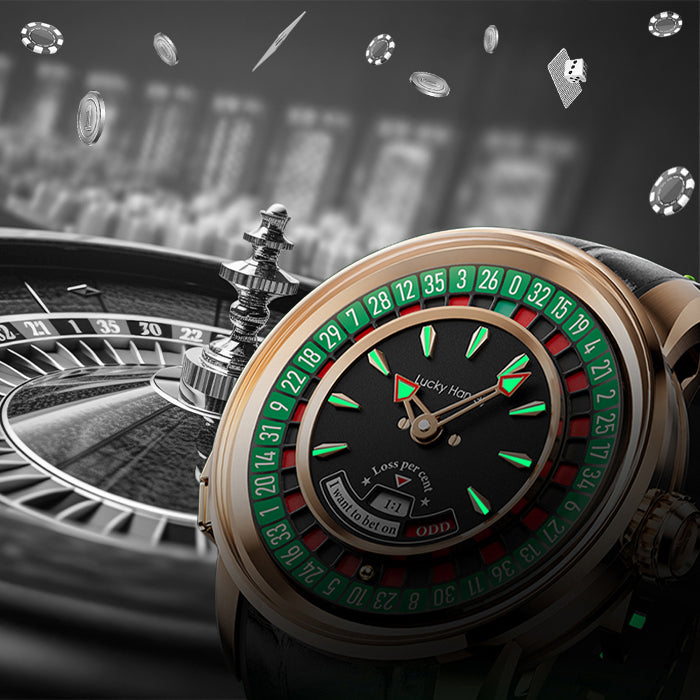
The newest addition to Lucky Harvey's casino-themed lineup, with a small production run across rose gold, silver, and black variants. View the Slots Machine collection. The casino-themed category is one Lucky Harvey effectively pioneered, which supports collector interest.

How to Buy a Limited Edition for Long-Term Value
If your purchase is partly motivated by long-term value (and there is nothing wrong with that motivation), four rules apply.
1. Buy early in the production cycle. The first pieces produced in a limited run often command a premium on the secondary market. Buying within the first three months of release maximises your chances of holding the most desirable serial numbers (#001 / #300, #002 / #300, etc., are particularly valued).
2. Keep the original packaging and documentation. Limited-edition resale values are 20–40% higher when the watch is sold with full original packaging, warranty card, authentication certificate, and serial registration documentation. Do not discard or damage any of the original materials.
3. Avoid engraving if resale matters. Engraved watches typically resell at 15–25% below non-engraved equivalents. If the watch is purchased partly for long-term value, leave the caseback un-engraved. Engraving makes sense for gift watches; not for collector pieces.
4. Service on schedule. A serviced limited-edition watch with documented service history commands a higher resale price than an un-serviced one. Service every 4–5 years and keep all service receipts.
Why Limited Editions Sometimes Don't Appreciate
Honesty matters in a value discussion. Some limited editions never appreciate, and a few even depreciate. Three common reasons.
The brand never reaches critical collector mass. Limited editions from brands with small collector communities lack the buyer base to support secondary-market pricing. The watch is genuinely scarce; nobody wants it.
The complication or design ages poorly. Watches that lean too heavily on trends (smart-watch hybridity, ultra-large case sizes, neon dial colours) often fail to appreciate even when limited. Classic complications and restrained designs hold value better than trend-driven ones.
The production run was too large to be meaningful. A limited edition of 5,000 pieces is barely limited at all. Look for production runs under 500, ideally under 300.
The Right Reason to Buy a Limited Edition
The single most important point in this guide: the right reason to buy a limited-edition luxury watch is because you want to wear it. Long-term appreciation is a nice secondary benefit. It should never be the primary reason.
A watch you bought purely as an investment is a watch you will not wear, which means you will not bond with it, which means you will eventually sell it for whatever modest appreciation the secondary market offers. A watch you bought because you love the design, the complication, or the brand will be worn for decades, will become part of your life, and will appreciate as a happy side effect.
Buy the watch you love. The value tends to follow.
Frequently Asked Questions
How much do Lucky Harvey limited editions typically appreciate?
Early-release Sound of Nature limited editions in retired colourways have traded at 25–40% above original retail in some secondary markets. Titanium Chiming and Enamel Chiming Snake pieces in particular have shown strong demand. Appreciation is never guaranteed but the pattern is consistent.
What is the difference between a limited edition and a special edition?
A limited edition has a hard production cap and is permanently retired. A special edition is a variant of a standard production watch (often a colour or strap variant) without a strict production limit. Limited editions hold value far better.
Is the serial number on the caseback important?
Yes — it is the watch's authentication on the secondary market. Keep all documentation that references the serial number, including the warranty card and authentication certificate.
Should I insure a limited-edition watch?
Yes, especially for pieces over $1,500. Standard home insurance often does not cover individual luxury items at full replacement value. Specialty watch and jewellery insurance is inexpensive and worth the cost.
Do limited editions need to be authenticated for resale?
Authentication via the original maker is the gold standard for high-value resale. Lucky Harvey supports serial verification for any of its limited editions — contact the brand via the support form to verify.
The Watch You Cannot Buy Twice
The limited-edition luxury watch is the rare collectible that gets to be both a beautiful object and a quietly appreciating asset — if you choose well. The rules are simple: real production cap, distinctive complication, established maker, restrained design, original documentation kept intact.
The Lucky Harvey limited editions fit the criteria. The chiming complications are genuinely unique at the price point. The production runs are genuinely capped. The pieces are genuinely serial-numbered. And — most importantly — they are watches you will actually want to wear, which is the only test that ultimately matters.
Browse Limited Editions
Numbered limited-edition watches from Lucky Harvey — chiming complications, automaton dials, hand-finished guilloche, in capped production runs across the catalogue.
Limited EditionsTitanium Chiming