
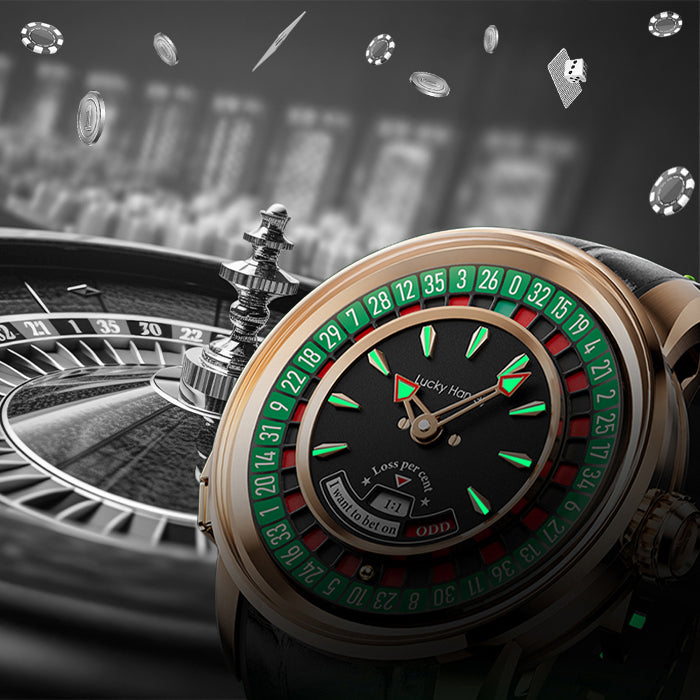
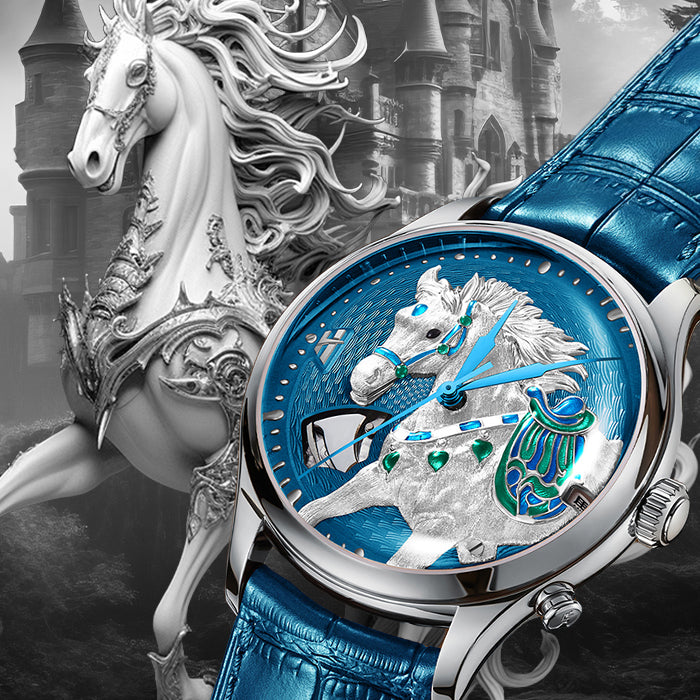
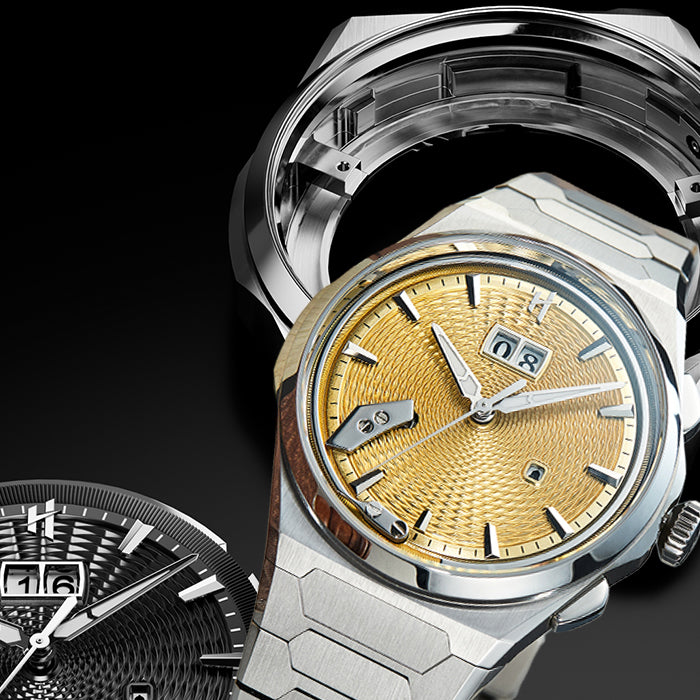
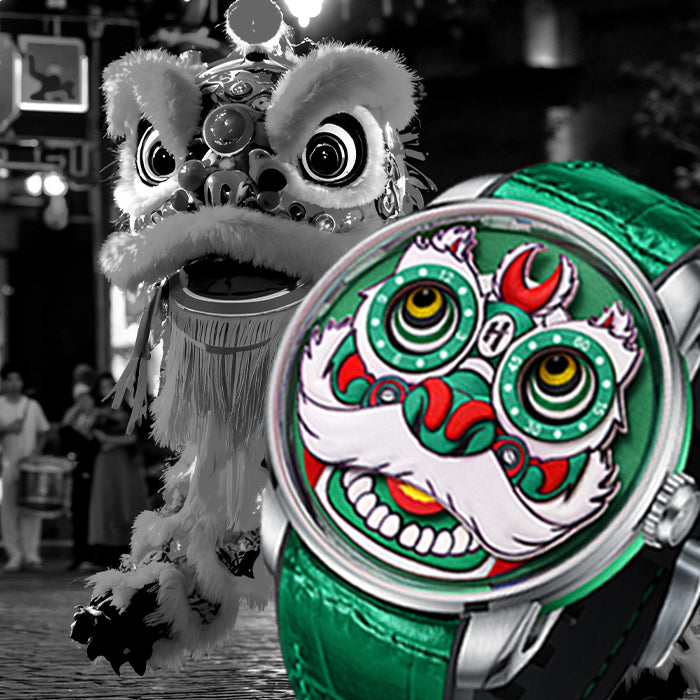







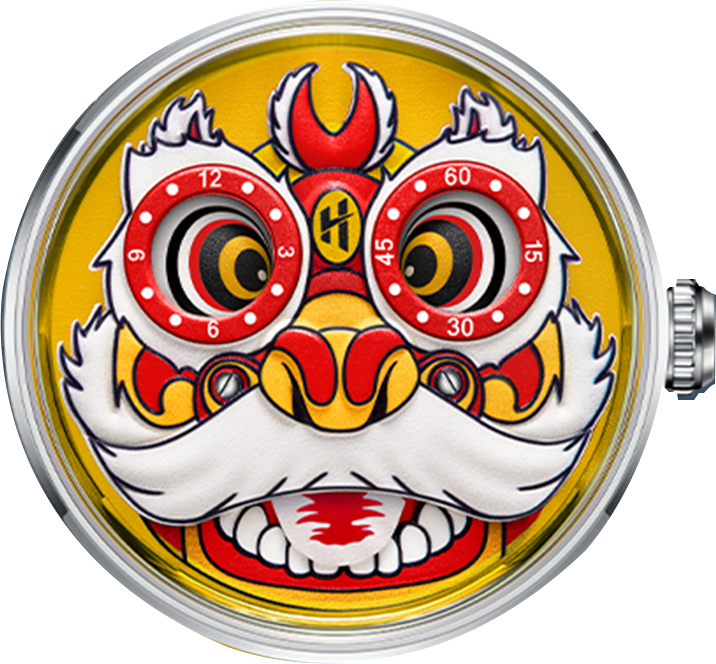
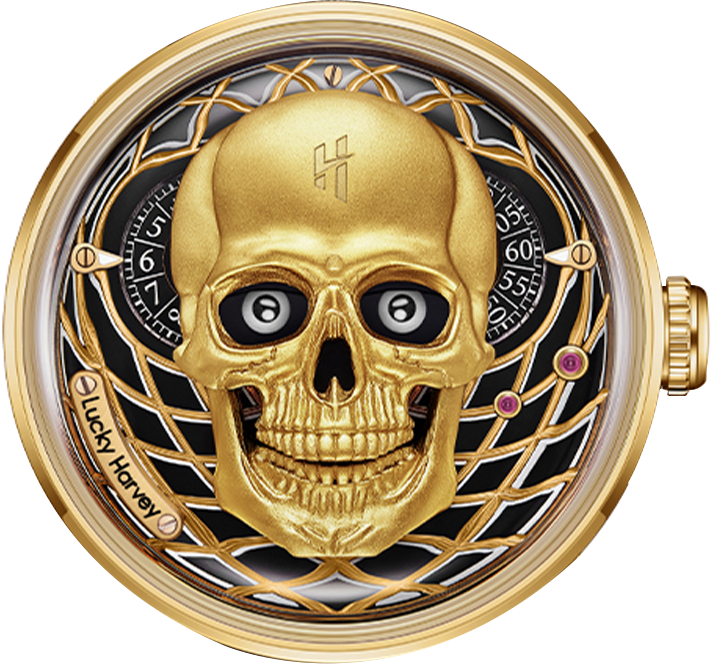

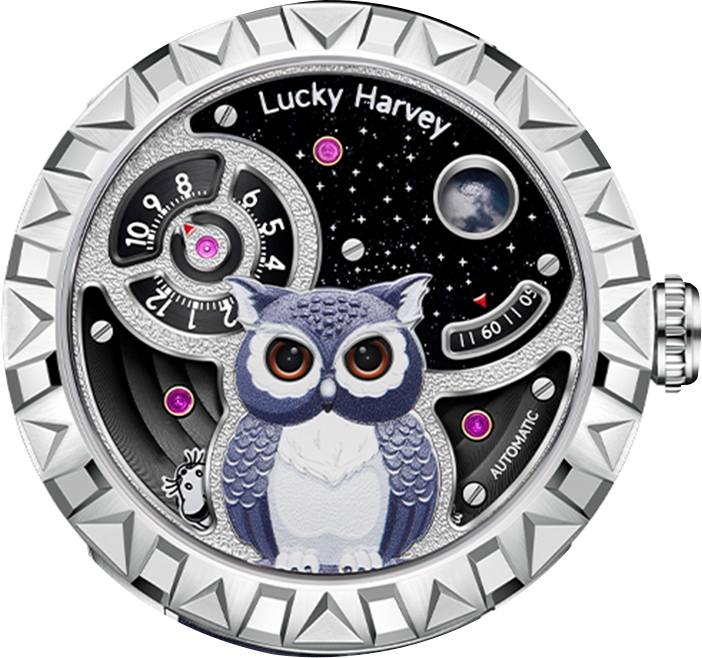
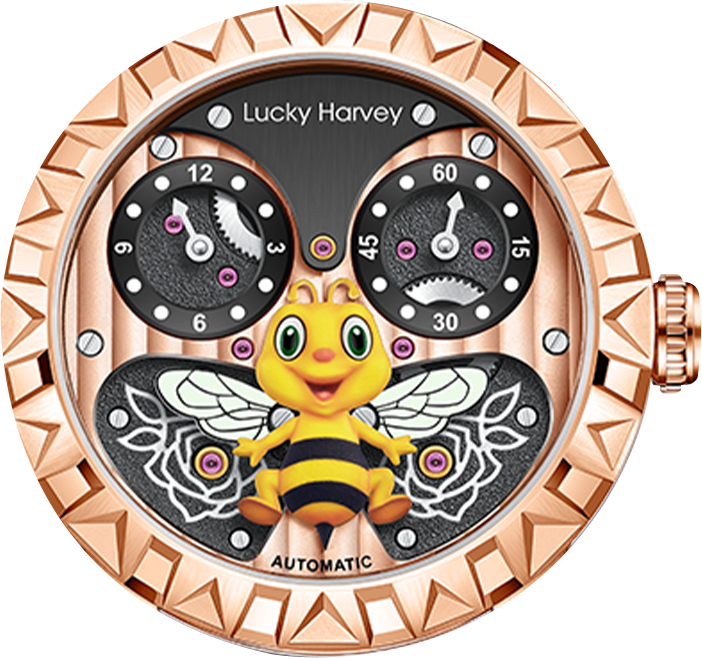
A skeleton watch is a mechanical watch whose dial and movement have been cut away so you can see the gears, wheels, and springs working inside. Watchmakers remove every gram of metal that is not structurally needed, then finish the exposed parts by hand. The result turns the movement itself into the design. In 2026, the idea has evolved further: openworked automaton dials add moving sculptures on top of the visible mechanics.
What Is a Skeleton Watch?
The name says it. A skeleton watch strips a movement down to its skeleton. The baseplate and bridges are pierced, carved, and bevelled until only the essential structure remains. Some brands skeletonise the dial side only. Others cut through the whole movement, so light passes from the front of the watch to the back.
You will also hear the word openworked. It means the same family of techniques. Purists use "skeletonised" for movements cut after production, and "openworked" for movements designed to be open from the start. In shops and search results, the two words are used interchangeably.
A Short History
Skeletonisation is old. The technique dates back to 18th-century France, where watchmaker André-Charles Caron is credited with the first skeleton pocket watches. For two centuries it stayed a niche art of hand-piercing and engraving. According to the Wikipedia entry on skeleton watches, the style moved into wristwatches in the 20th century and boomed when modern machining made openworked bridges affordable. Today skeleton dials appear at every price level, from $300 fashion pieces to $200,000 haute horlogerie.
How Skeletonisation Works
A watchmaker starts with a working movement design. Then, step by step:
1. Cutting
Material is removed from the baseplate and bridges. Every cut must keep the movement rigid. Cut too much and the watch loses accuracy and strength.
2. Finishing
Exposed edges are bevelled (anglage), brushed, or polished. Finishing is where cheap and serious skeleton watches separate. Rough, stamped edges look grey and flat. Hand-finished or well-machined edges catch light.
3. Assembly
The movement is rebuilt and regulated. Because the structure is lighter, regulation takes extra care.
What to Look For When Buying
Finishing quality
Look at photos of the bridge edges. You want clean, defined lines, not raw stamped metal.
Sapphire crystal
An open dial invites long staring. Sapphire resists the scratches that mineral glass collects. Every Lucky Harvey watch uses sapphire on the front.
Movement visibility
The point of a skeleton watch is to see mechanics move. A balance wheel beating at 28,800 vibrations per hour is hypnotic. Check that the visible parts actually move, not just sit there.
Legibility
Skeleton dials sacrifice contrast. Good designs solve this with lumed markers, coloured hands, or a separate time display.
Skeleton vs Open-Heart vs Openworked Automaton
| Style | What you see | Typical price | Best for |
|---|---|---|---|
| Open-heart | A small window over the balance wheel | $300–$1,000 | First mechanical watch |
| Full skeleton | The whole movement, front to back | $800–$200,000+ | Movement purists |
| Openworked automaton | Visible mechanics plus sculpted figures that move on the hour | $999–$2,399 (Lucky Harvey) | Collectors who want theatre |
The Openworked Automaton Dial: The Modern Evolution
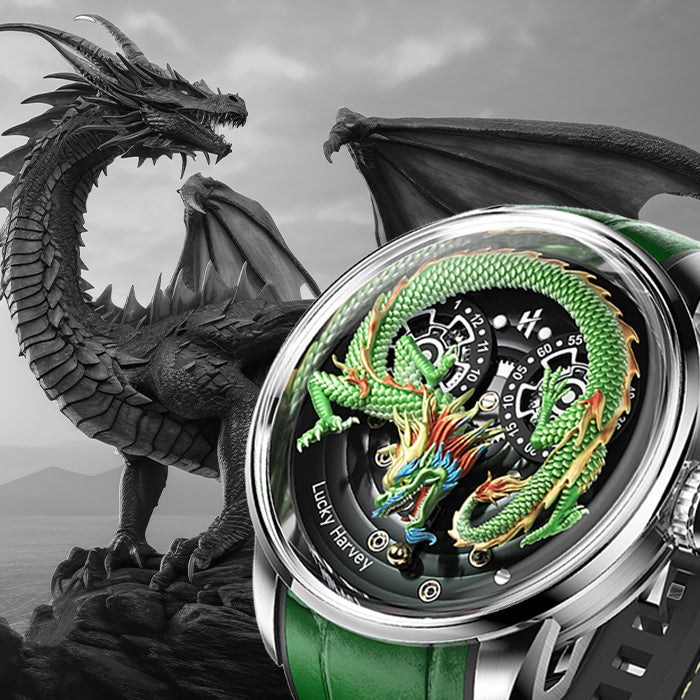
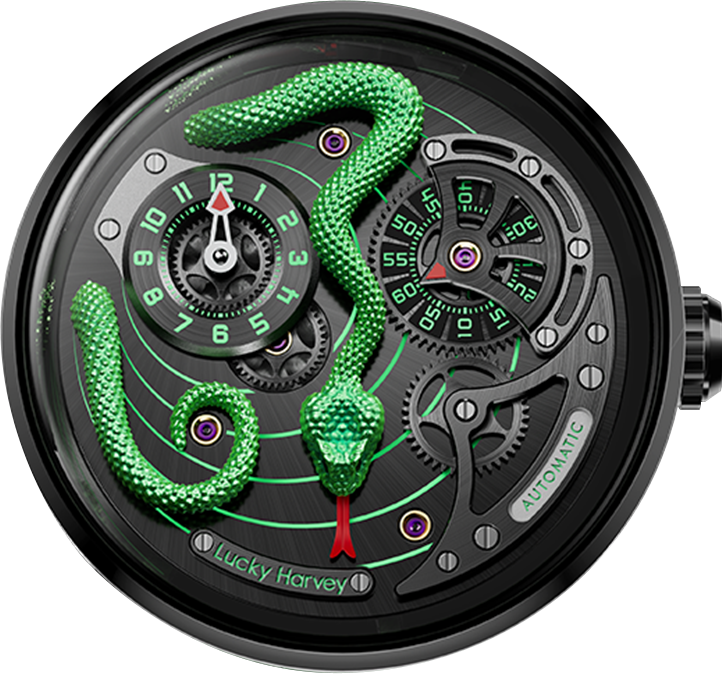
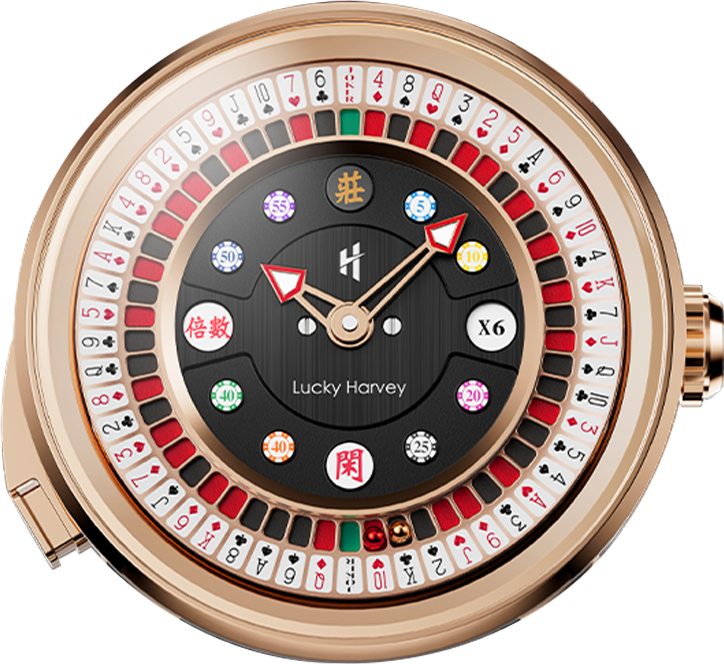
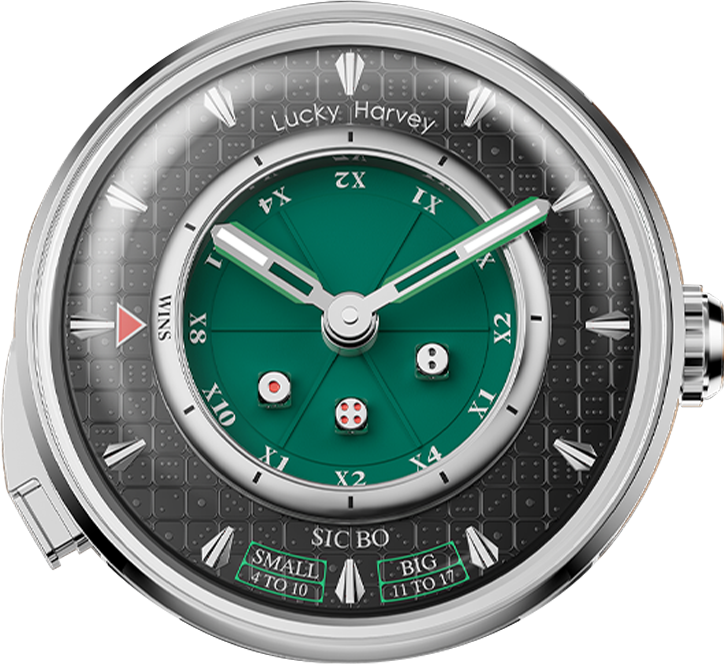
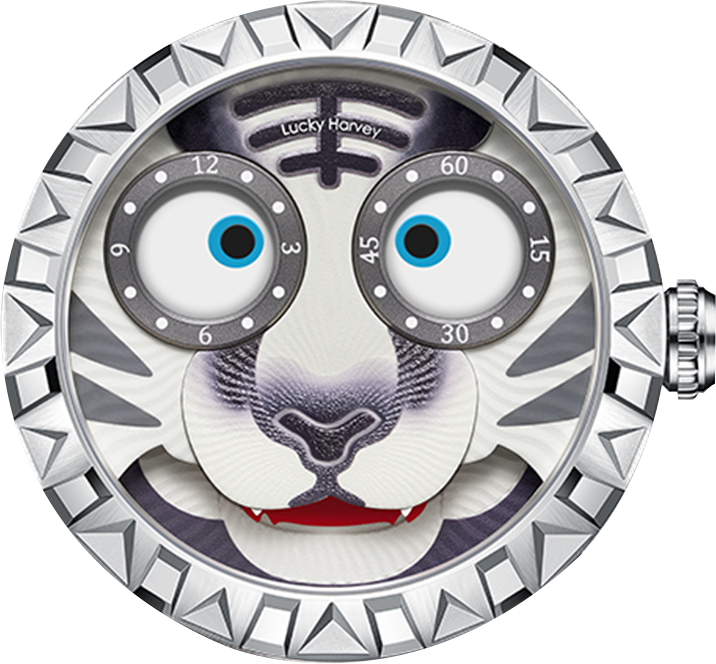
Classic skeletonisation asks one question: how much metal can we remove? The automaton dial asks a second one: what can we add on top? Lucky Harvey, an independent watchmaker founded in 2021 and registered in Hong Kong, builds its skeleton dial men's watches this way. Hand-sculpted 925 silver dragons, snakes, and zodiac animals sit over openworked, multi-layer dials. On the hour, elements of the scene move — 24 mechanical performances a day, driven by an in-house self-winding calibre with a 40-hour reserve.
The White Dragon Automaton Watch ($1,899) pairs a sculpted silver dragon with a 999 gold bead above a layered open dial. The Green Snake Automatic Watch ($1,699) coils a hand-finished serpent through the openwork. Time is read by the signature dual-dot display: the left dot marks the hour, the right dot marks the minute, so the sculpture keeps the centre of the dial. If you want the mechanics explained in depth, read our guide to what an automaton watch is and how a dial comes to life.
Exhibition Casebacks
A skeleton dial shows the front of the movement. An exhibition caseback — a sapphire window on the back — shows the rotor and gear train from behind. Together they give a full tour of the calibre. Most serious skeleton and automaton watches now include one. It is also a quick authenticity check: a genuine movement has crisp, even finishing that fakes rarely copy well.
Where to Buy a Skeleton Watch Safely
Skeleton and automaton watches are exactly the kind of visual pieces counterfeiters copy. Buy from the brand's official channels. Lucky Harvey sells only through two official websites — luckyharvey.com worldwide and luckyharveywatch.in for India — with a two-factor warranty: a stamped barcode warranty card plus a sale record on the official website. Purchases outside official channels are not covered. Official orders ship free and insured via FedEx Priority or DHL Express, delivered duties paid in 2–7 working days, with a 2-year international warranty, lifetime support, and 7-day returns.
Suggested Watches
Openworked automaton dials from the Lucky Harvey Craftsmanship Series.

White Dragon Automaton Watch — $1,899
Hand-sculpted 925 silver dragon with a 999 gold bead over a layered openworked dial. Moves on the hour, 24 times a day.
Discover
Silver Dragon Automaton Watch — $1,899
Natural sterling silver dragon over open mechanics, with the dual-dot time display keeping the dial clear for the sculpture.
Discover
Green Snake Automatic Watch — $1,699
Hand-painted enamel serpent coiled through an openworked dial, powered by the in-house self-winding calibre.
DiscoverQuick Answers
What is a skeleton watch?
A mechanical watch whose dial and movement are cut away so the working gears, springs, and wheels are visible. The structure is finished by hand or precision machine so the mechanics become the design.
Are skeleton watches reliable?
Yes, when well made. Skeletonisation removes non-structural metal only. A properly engineered openworked movement keeps normal accuracy and durability.
What is the difference between skeleton and openworked?
In practice, nothing. Technically, "skeletonised" means cut after production and "openworked" means designed open from the start. Modern brands use both words for the same look.
How much does a good skeleton watch cost?
Entry open-heart pieces start around $300. Well-finished skeleton and openworked automaton watches sit between $800 and $2,500. Haute horlogerie skeletons run far higher.
Is an automaton watch a skeleton watch?
It is the modern evolution of one. An openworked automaton shows the mechanics like a skeleton watch, then adds sculpted figures that move on the hour above them.