

If you have spent any time around luxury watch marketing you have seen the word 'tourbillon' attached to a price tag that does not seem to make any sense. Tourbillon watches are frequently ten, twenty, or a hundred times more expensive than the same watch without one. Sellers describe them as the pinnacle of mechanical watchmaking. Collectors treat them as a badge of entry into the real hobby. Almost no one explains what they actually do, or — more importantly — whether they do anything useful at all. Let us fix that.
The Physics Behind It, in Plain English
Every mechanical watch keeps time by using a balance wheel — a tiny weighted ring that swings back and forth hundreds of times a minute against a hairspring. The balance wheel is the heart of the watch. If it swings perfectly evenly, the watch keeps perfect time. If something makes it swing slightly faster on one side than the other, the watch runs fast or slow.
One of the things that affects how the balance wheel swings is gravity. When your watch is lying flat on a table, gravity pulls the balance wheel evenly and it swings symmetrically. When your watch is standing vertically — say, when you rest it on its crown at night — gravity pulls the wheel unevenly, and the swing becomes slightly asymmetric. That asymmetry makes the watch run slightly differently in vertical positions than in horizontal ones.
The tourbillon is a mechanical solution to that specific problem. Invented by Abraham-Louis Breguet in 1795, it mounts the entire balance wheel and escapement inside a small rotating cage that turns once a minute. The idea is that as the cage rotates, the balance wheel cycles through every vertical orientation once a minute, and the position-related errors average out to zero. A pocket watch — which spent most of its time vertical in a waistcoat — could theoretically benefit enormously.
A Short History
Breguet patented the tourbillon in 1801. For the next 150 years it was an extremely rare complication, built almost exclusively by master watchmakers in pocket watches. The first wristwatch tourbillon did not appear until 1947. Through the 1960s and 1970s, only a handful of Swiss firms made them at all. It was a high-craft curiosity, respected but commercially irrelevant.
Everything changed in the early 2000s. As mechanical watchmaking boomed after the quartz crisis, brands needed a visual symbol of high craftsmanship that collectors could see on the dial without needing to understand the movement. The tourbillon was perfect — it rotates visibly through a dial aperture, it looks mechanical, and it had the historical prestige built in. Prices exploded. By 2010 the tourbillon had become the single most marketed complication in luxury watchmaking, and every brand from Patek Philippe to Chinese factories was making one.
The Real-World Benefit (This Is Where the Story Gets Awkward)
Here is the part that almost no tourbillon marketing will tell you. In a wristwatch — which spends most of its day in constant motion on a moving arm — the position errors that the tourbillon was designed to fix are already averaged out by the simple fact that your arm moves. The tourbillon solves a problem that existed for stationary pocket watches and that essentially does not exist for modern wristwatches.
In real accuracy tests, high-grade non-tourbillon modern movements (COSC-certified chronometers, Grand Seiko high-beat calibers, Rolex's Superlative Chronometer) consistently match or beat wristwatch tourbillons for daily timekeeping accuracy. Not by a little — by a lot. A $6,000 modern Rolex is usually more accurate than a $80,000 tourbillon.
This is not a secret among serious collectors. It is rarely said in public because the tourbillon is such a beloved complication, and because it is not really sold as a timekeeping device anymore. It is sold as mechanical art. Which brings us to the honest case for it.
Why People Still Buy Them (And Why That's Fine)
A tourbillon is a beautiful, hypnotic, hand-finished piece of mechanical engineering. Watching one rotate through a dial aperture is one of the most satisfying experiences in the hobby. The best tourbillons contain 70 to 90 individual components in a cage weighing less than half a gram. Hand-assembling one takes an experienced master watchmaker multiple days. Every piece is finished to a standard of hand-polish, bevelling, and decoration that a machine cannot replicate.
You are not paying for accuracy. You are paying for craft. A tourbillon is to watchmaking what a hand-built Patek Philippe Grande Complication is to mass-market chronographs — enormously more expensive, enormously more impressive, and completely unnecessary for telling time. The value is in the making, not the function.
That is an honest reason to buy one. It just is not the reason the marketing usually gives.
Alternatives Worth Your Money
If what you actually want is extremely accurate timekeeping, skip the tourbillon and buy one of these instead:
- A COSC-certified chronometer. Consistently accurate to -4/+6 seconds per day, costs a tenth of a tourbillon.
- A Grand Seiko Spring Drive. A hybrid technology that achieves accuracy no mechanical watch can match, starting around $5,000.
- A Rolex Submariner or Datejust with Superlative Chronometer certification. -2/+2 seconds per day, bulletproof, and holds value.
If what you actually want is visual mechanical theatre on the dial, skip the tourbillon and look at these:
- A skeleton watch with an open-heart view of the escapement — the same mesmerizing motion, at one to five percent of the price.
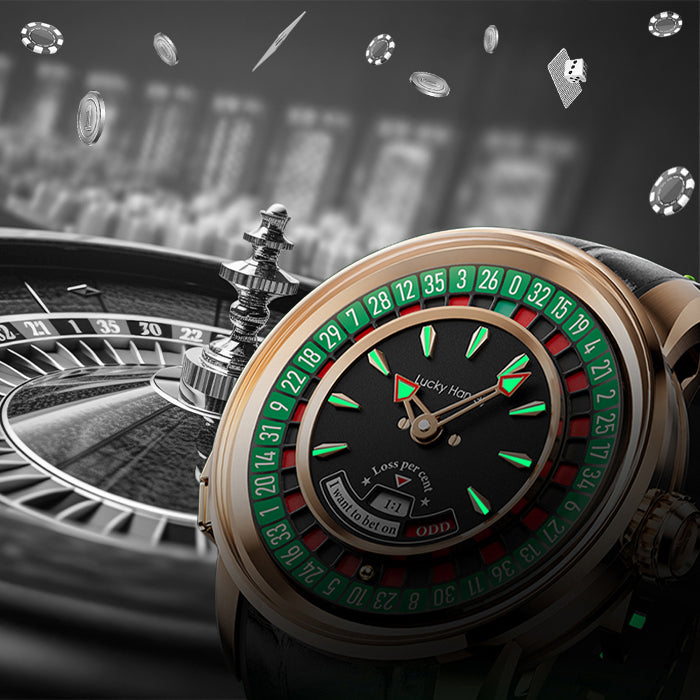
- An automaton watch with a rotating roulette wheel or animated dial — more visually interesting than a cage, and more fun to own.
- A jump-hour or wandering-hours watch — completely different mechanical choreography, still genuinely rare.
Our Honest Position
We love tourbillons. We also think almost no one under $10,000 should buy one. At the sub-$5,000 price point where 'affordable' tourbillons live, the finishing quality is usually low enough that you are paying for a badge, not craft. At the true high end — Journe, Voutilainen, independent Swiss — the craft is real and the badge is earned, but at that price the decision is already not about rational value. Buy a tourbillon because you love one specific watch that happens to have one, not because the complication is on a list of things serious collectors are supposed to own.
Frequently Asked Questions
Does a tourbillon make a watch more accurate?
Not in a wristwatch, no. In a pocket watch yes, slightly. The complication solves a historical problem that modern wristwatches do not really have.
Are affordable tourbillons worth it?
Usually no. Below $5,000 the finishing quality rarely justifies the price jump over a comparable non-tourbillon watch. Spend that money on a better base movement instead.
What is a flying tourbillon?
A variant where the cage is supported only from below, so you can see the entire mechanism rotating without a bridge across the top. Visually cleaner, mechanically harder to build.
Which tourbillon brand is best?
At the very top, F.P. Journe, Philippe Dufour, and Greubel Forsey are the names that still matter to collectors. Among bigger brands, Patek Philippe and A. Lange & Söhne are the benchmarks.
READY TO SHOP?
Browse the full Craftsmanship Series collection on Lucky Harvey, or join our Collector's List for early access to new drops, restocks and subscriber-only pricing.