








For most of the 20th century, enamel watch dials were dying. The craft was difficult, the failure rate was brutal, and printed dials could imitate the look at a fraction of the cost. By the 1980s, fewer than ten people in the world were producing real enamel dials at any meaningful scale. Then, around 2010, something unexpected happened: collectors started caring again, and the few remaining enamel masters found themselves with three-year waitlists. This is the story of a craft that nearly disappeared — and what makes the modern revival worth paying attention to.
What Is Grand Feu Enamel?
Grand feu — French for 'great fire' — is the most demanding form of enamel work. The process starts with a metal disc, usually gold or copper. The dial maker grinds enamel (essentially powdered glass) into a fine paste, applies it in thin layers across the metal, and fires the disc in a kiln at temperatures around 800°C. The fire melts the glass into a glossy, permanent surface fused to the metal.
Each layer takes one firing. A finished grand feu dial requires five to fifteen firings, with cooling and inspection between each one. Every firing carries a risk: a single bubble, crack, or color shift, and the entire dial is destroyed. Master enamelers typically lose between 30% and 60% of their dials in production. That failure rate is the entire reason a real grand feu dial costs what it does.
Champlevé vs Cloisonné: Two Different Crafts
There are two main techniques for creating colored designs in enamel, and they look superficially similar but are completely different processes.
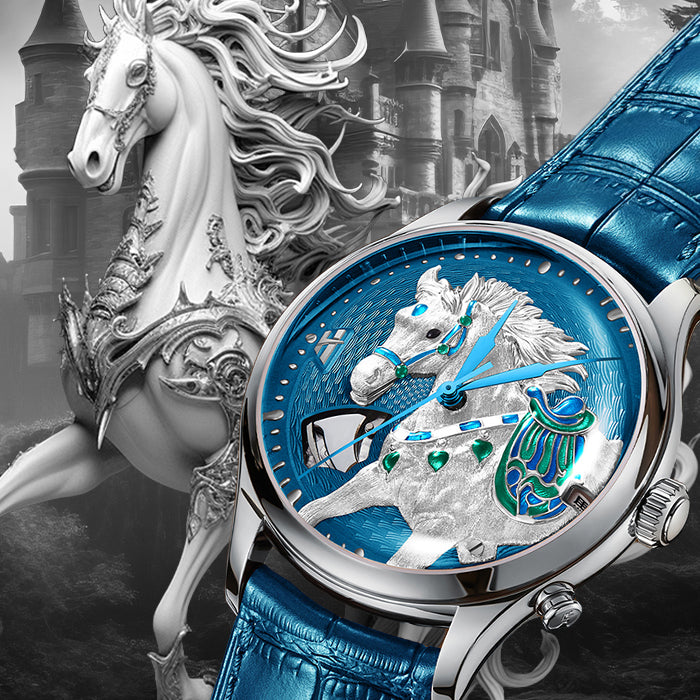
Champlevé starts with a thicker metal base into which the dial maker carves or etches recesses for each color zone. The recesses are then filled with colored enamel and fired. The hard metal walls between zones become part of the design — visible as fine outlines. Champlevé produces a sculptural, slightly raised surface and is often used for landscapes, animals, and complex pictorial scenes.
Cloisonné starts with a flat metal base. The dial maker bends thin gold wires into the outlines of each color zone and solders them to the surface, creating tiny enclosed compartments. Each compartment is then filled with colored enamel and fired. The result is an intricate jewel-like grid where the gold wire outlines glow against the colored fields. Cloisonné is the technique used for the most famous enamel dials in history — Patek Philippe's world-time dials, Vacheron Constantin's pictorial dials, and the Imperial enamel pocket watches sent to China in the 18th and 19th centuries.
Cloisonné is harder than champlevé. It requires the wire-bending skill of a jeweler, the firing skill of an enameler, and the design skill of a painter, in one person. There are perhaps thirty cloisonné enamelers in the world capable of producing dial-quality work today.
The Revival
Three things brought enamel dials back. First, a small group of independent Swiss makers — Voutilainen, Journe, Greubel Forsey — chose to use enamel for their highest-end work specifically because it could not be faked by machine. Second, collectors began rewarding the choice with serious money, paying $50,000 to $200,000 premiums for enamel-dialled versions of otherwise standard watches. Third, and most interesting, the craft started moving outside Switzerland. Japanese, Russian, and Chinese enamelers, working in isolation through the 1990s, emerged as the Swiss revival created a market large enough to support them.
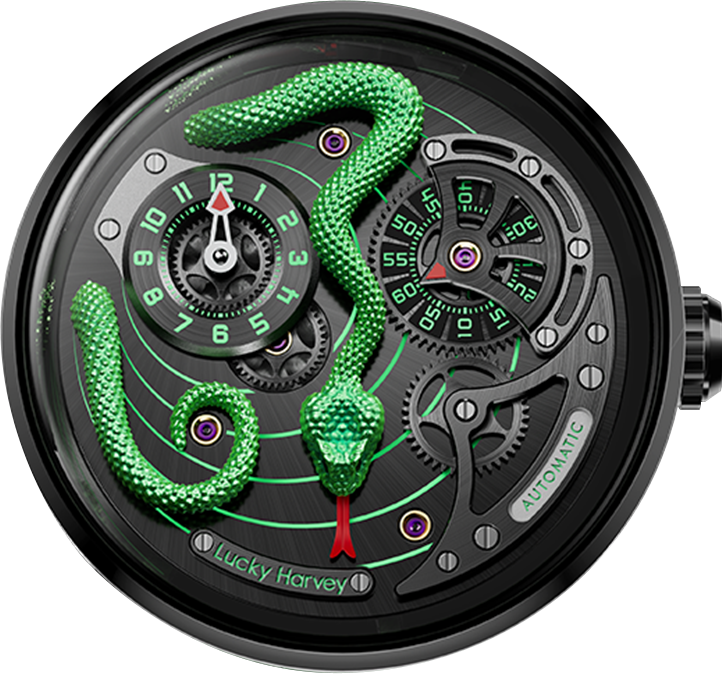
The Lucky Harvey enamel chiming snake automaton is one of the clearest examples of where the new wave is heading. The dial features hand-laid colored enamel on the snake's body, integrated with a moving automaton mechanism, in a watch that sits well below the price of comparable Swiss enamel pieces. A decade ago this combination — real enamel, real automaton, real chime, under $5,000 — was simply not available outside of bespoke commissions.
Why Enamel Costs More
Three reasons, in order of importance.
First is the failure rate. When 40% of your dials are destroyed during production, the surviving dials have to absorb the full cost of the failed ones. A successful $2,000 enamel dial may have cost the maker $1,200 in failed attempts to produce. That cost is real and unavoidable.
Second is the time. A grand feu dial takes 30 to 60 hours of skilled labor over a period of two to three weeks. That labor is performed by people who have spent ten or twenty years learning the craft and cannot be replaced quickly. There are no enamel apprentices waiting in the wings.
Third is the materials. Real enamel uses specific mineral compositions for each color, some of which are no longer manufactured and have to be sourced from old stock. Gold and silver bases are expensive in their own right. The actual material cost is small compared to the labor, but it adds up.
How to Tell Real Enamel From a Print
- Look at the surface under angled light. Real enamel has a slight glassy depth and very subtle imperfections — micro-bubbles, faint variations in tone. A print is perfectly flat.
- Check the back of the dial if you can. Real enamel work usually has a counter-enamel (a protective layer) on the back of the dial to prevent warping during firing. Prints don't.
- Look at the price. Below $3,000 for a Swiss watch, real enamel is essentially impossible. Between $3,000 and $10,000 from non-Swiss makers, real enamel is possible but rare. Above $10,000 from a serious brand, it's the norm at the top end of the line.
- Read the spec sheet carefully. Brands that use real enamel say so explicitly and proudly. Brands that don't will use phrases like 'enamel-style' or 'inspired by enamel' to imply without claiming.
- Ask for documentation. Real enamel dials usually come with a certificate of authenticity from the dial maker.
Frequently Asked Questions
Can enamel chip?
Yes — that's its main vulnerability. A direct hard impact can crack or chip an enamel dial, and once chipped, it cannot be repaired without replacing the entire dial. This is why enamel watches are usually treated as occasion pieces, not daily beaters.
Does enamel fade over time?
Almost never. Properly fired enamel is essentially permanent — 200-year-old enamel dials look as vivid as the day they were made. This is part of what makes the craft worth paying for.
Are Chinese enamel dials as good as Swiss?
The best ones are. The skill is in the individual maker, not the country. Chinese enamel dials at the top of the range now match Swiss work at a fraction of the price; lower-end Chinese enamel is more variable in quality and harder to evaluate without seeing in person.
How do I service an enamel dial?
Carefully. Always use an authorized service center that has experience with enamel — a regular watchmaker may not handle it correctly. Never attempt to clean an enamel dial yourself.
READY TO SHOP?
Browse the full Enamel Chiming Snake collection on Lucky Harvey, or join our Collector's List for early access to new drops, restocks and subscriber-only pricing.